
The Public Memory of Creatures
Fantastic Beasts and Where to Find ThemThis flow traces how creature stories persist in art, folklore, rumour, and official explanations, shaping what different communities believe they have seen.
increasing Bearing strength in each event
 decreasing
Bearing strength in each eventdecreasingCreatures in Medieval Art
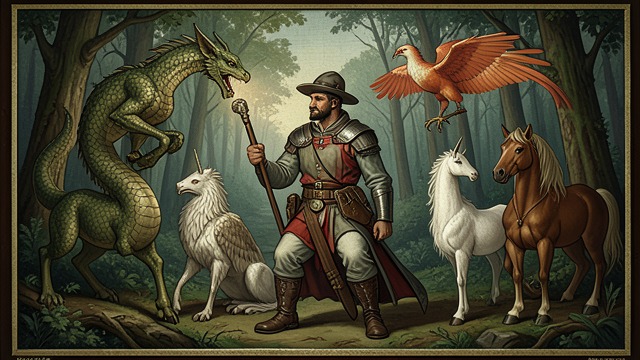
Creatures in Medieval Art
A visible magical past
Muggle art and literature from the Middle Ages depict Dragons, Griffins, Unicorns, Phoenixes, and Centaurs. Their portrayals may be inaccurate, but they imply a time when magical creatures were part of ordinary understanding.
Memory without precision
The images preserve recognition more readily than accurate knowledge. Some creatures are imagined comically or confused with other animals.
The artwork makes cultural memory a partial record. People may remember the shape of a creature while losing the knowledge needed to understand its nature.
The Augurey’s Reputation
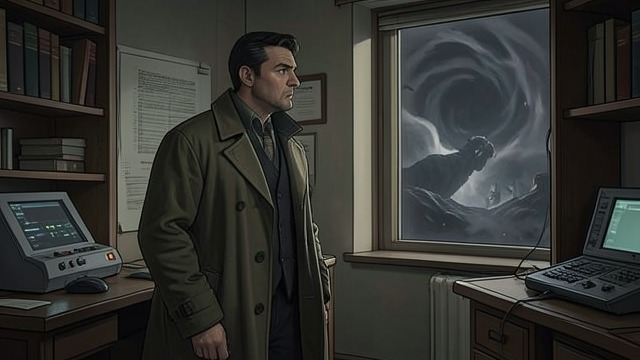
The Augurey’s Reputation
Fear built around a sound
The Augurey’s throbbing cry is believed to predict death, and wizards fear hearing it. Stories of heart attacks near nests give the belief an alarming reputation.
Research changes the story
Observers discover that the bird sings before rain. The same cry becomes a weather forecast, though its persistence can still irritate household listeners.
A public reputation can survive long after a creature’s behaviour has been misunderstood. Careful research changes what the sound means without changing the sound itself.
The Loch Ness Rumour
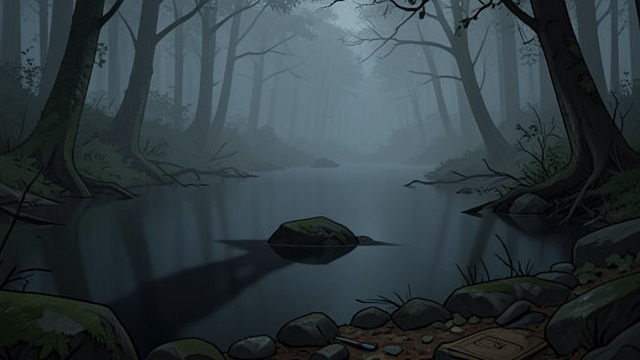
The Loch Ness Rumour
A shape becomes a story
The largest Kelpie’s sea-serpent form helps generate reports of an extraordinary creature at Loch Ness. Its changing appearance supplies new material for public speculation.
Evidence is contested
Photographs and witness accounts attract attention, while wizard authorities try to persuade Muggles that the evidence is fake or misinterpreted. The debate becomes a contest over what the public will believe.
The rumour reveals that a creature’s reputation may be shaped by its own transformations and by the stories people build around them. Secrecy has to contend with both animal behaviour and public imagination.
Dodgy Dirk’s Story
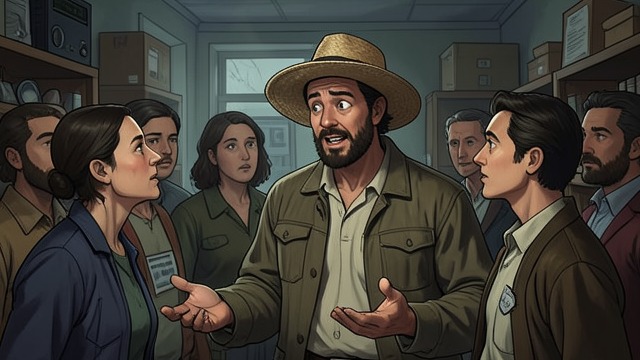
Dodgy Dirk’s Story
A surviving account
A resident of Ilfracombe is said to keep telling people about a flying lizard that punctured his lilo, despite the mass Memory Charm cast after the Dragon incident. His story persists beyond the official repair.
Disbelief as its own explanation
Listeners generally consider him drunk or eccentric. That reputation prevents the account from becoming accepted evidence, even though the event it describes was real.
The story gives one witness a small, comic place in a vast secrecy system. Public memory is not erased completely; it can be redirected into disbelief and local legend.
A Textbook Becomes a New Story
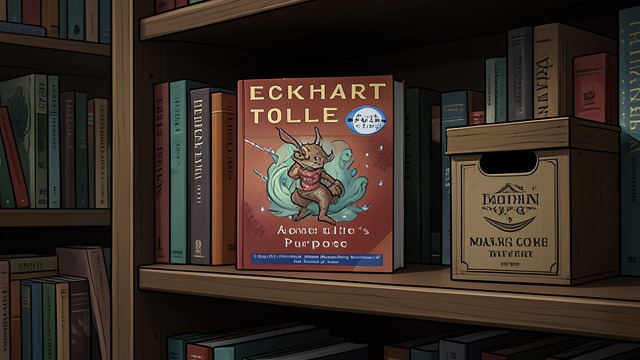
A Textbook Becomes a New Story
Fictional history for new readers
The special edition introduces a wizarding textbook to Muggle bookshops and assures purchasers that the creatures described are fictional. For Muggle readers, the volume becomes a playful story about a world they are not meant to see.
Charity gives the object a real effect
The proceeds support children’s causes through Comic Relief U.K. The book’s invented creatures and real-world fundraising occupy different levels of the reader’s experience.
The edition uses fiction to invite readers into an imaginative world while directing their attention toward actual need. Its public memory will include both the creature guide and the charitable purpose of its publication.
the Middle Ages
before its cry is understood as a weather sign
during the Kelpie’s public appearances
after the 1932 Ilfracombe Incident
September 2001
